The Goldmine of Senior Lifts & Ramps: Own a Piece of the $120B Aging-in-Place Industry
The Senior Care Dogma that Costs Families $4-8k per month.
The default for most American families is to send their aging seniors to a nursing home- a decision costing them $4,000-$8,000 per month.
Yet most seniors don’t want to move out of their homes. In most cases, the obstacle is mobility: getting up the stairs, getting in and out of the bath. A stairlift solves that for a one-time cost of around $4,000, installed in half a day, available as soon as tomorrow.
That’s the premise behind home accessibility solutions — specialized equipment purpose-built to help seniors age in place. It’s a category projected to grow to $120B by 2030.
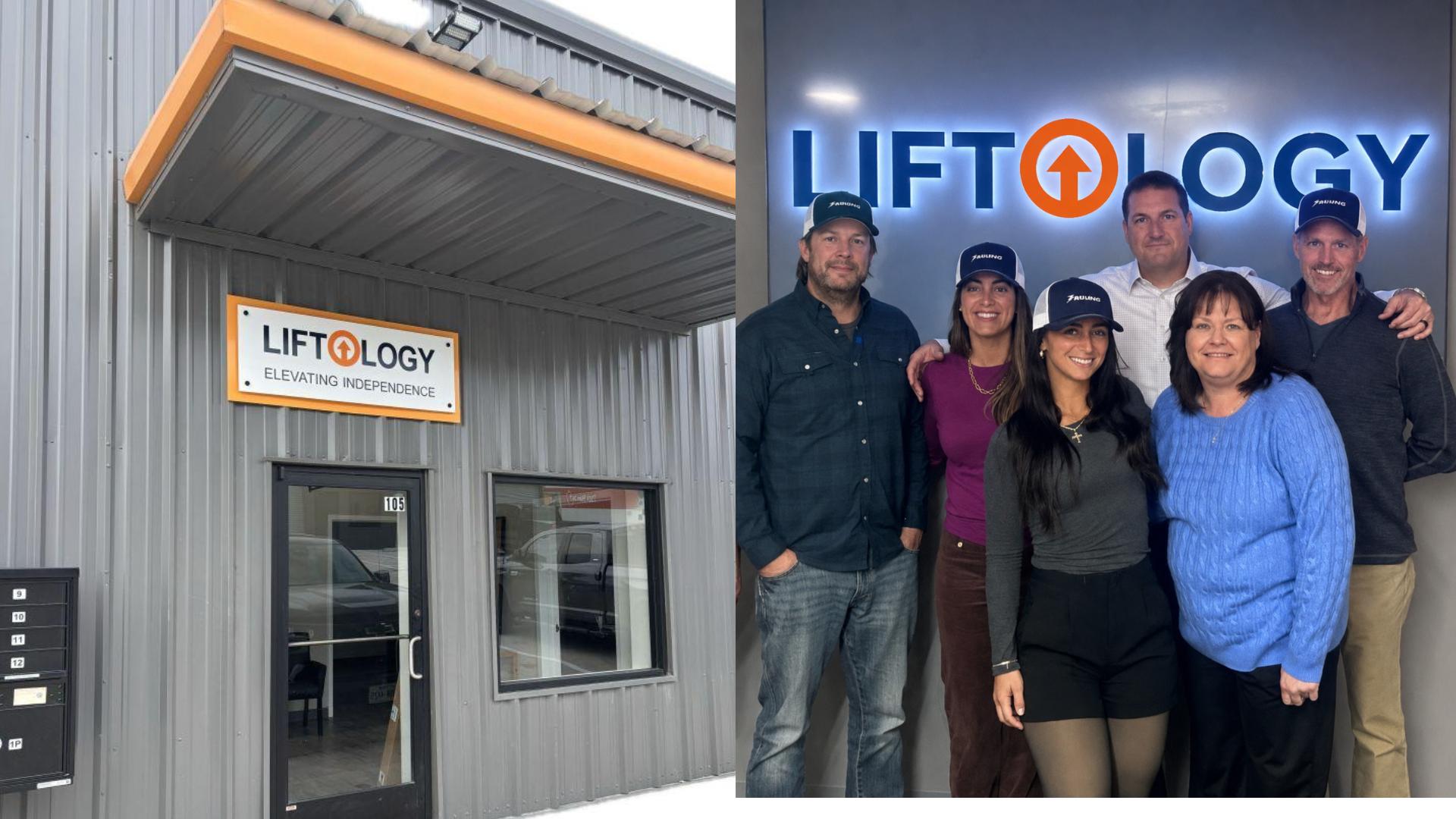 A look inside and outside a Liftology facilityg
How AI comes to Liftology’s Rescue
Liftology isn’t the first home accessibility franchise on the block.
There are a few other brands, yet demand far outpaces the supply in every market. When you call to request a home assessment, most times you never hear back.
The founding team knows this firsthand. Dave Pazgan launched 101 Mobility — the first franchise in the space. Jen and Gordon Raney were his largest franchisees who later exited to private equity.
With over 50 years of combined experience in the space, they know that realiability and promptness are the baseline the industry needs. Digital nativity is the real long-term differentiator.
Most people in a mobility crisis don’t know the solution exists. They know the problem that they increasingly bring to AI chatbots. The most AEO-optimized brand shows up. From that point, it’s up to the human-in-the-loop, the local franchisee, to capture and convert this prospect.
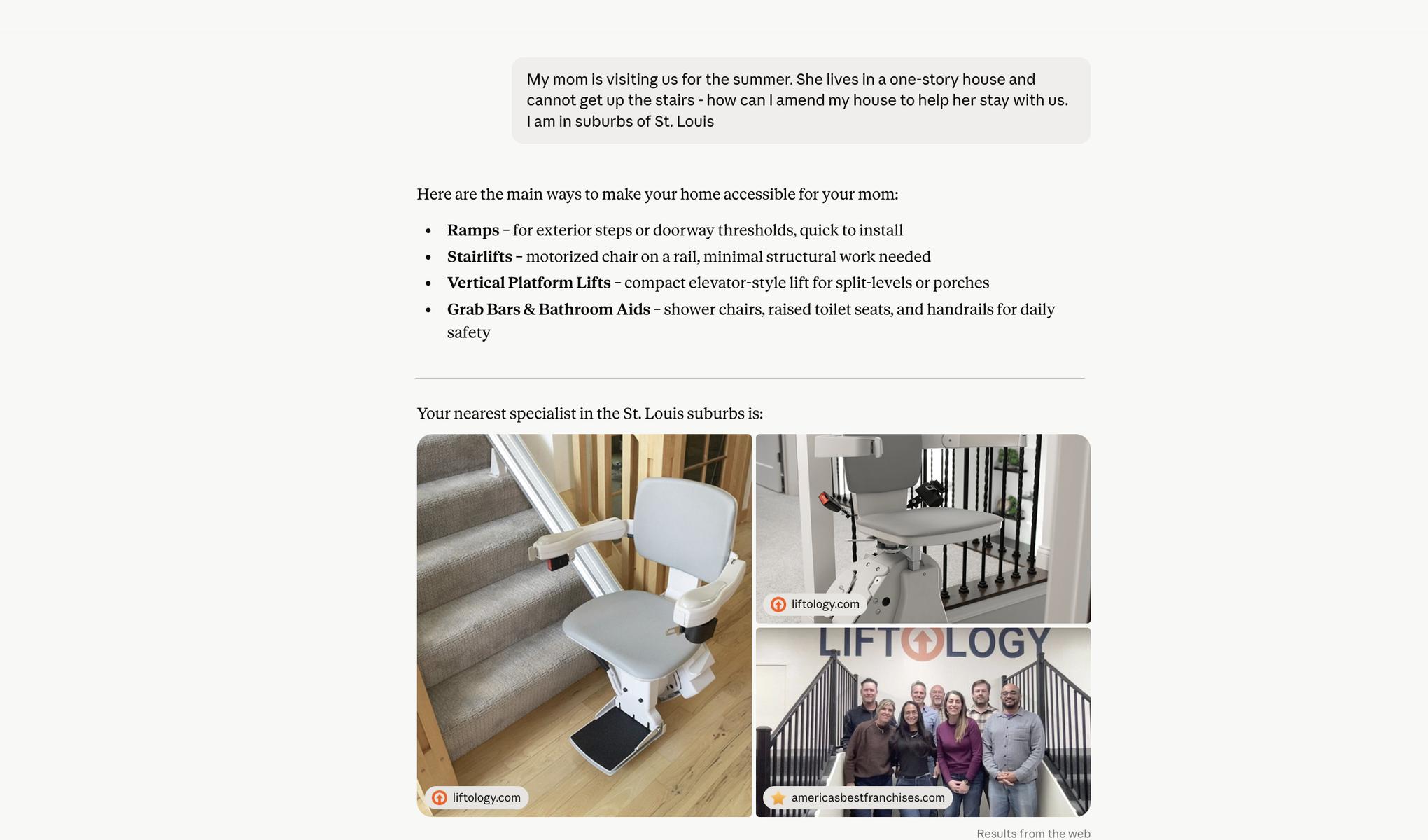 People cannot Google search a solution, but they can AI-search a problem they know they have
A High Ticket Cash Business in a Rapidly Growing Industry.
Liftology is not a fully mobile franchise, but the investment range (~$184,000) is one of the lowest in the industry. Roughly $40,000 of that is inventory plus ~$25,000 of working capital. Larger territories (1–1.5M people) are available at $250,000.
Apart from the franchisee fee and insurance costs, setting up a showroom is one of the largest upfront costs. The founders learned that a presentable showroom is a distinctive competitive advantage in an industry where trust is scarce. Most importantly, an owner can be operational within a few weeks.
“One of the biggest advantages of this business is that it’s cash-based,” Gordon says. Insurance rarely covers stairlifts, which means no reimbursement delays, and full control over pricing and margins. There’s also no seasonality or economic sensitivity. People don’t call because they want to; they call because they have to.
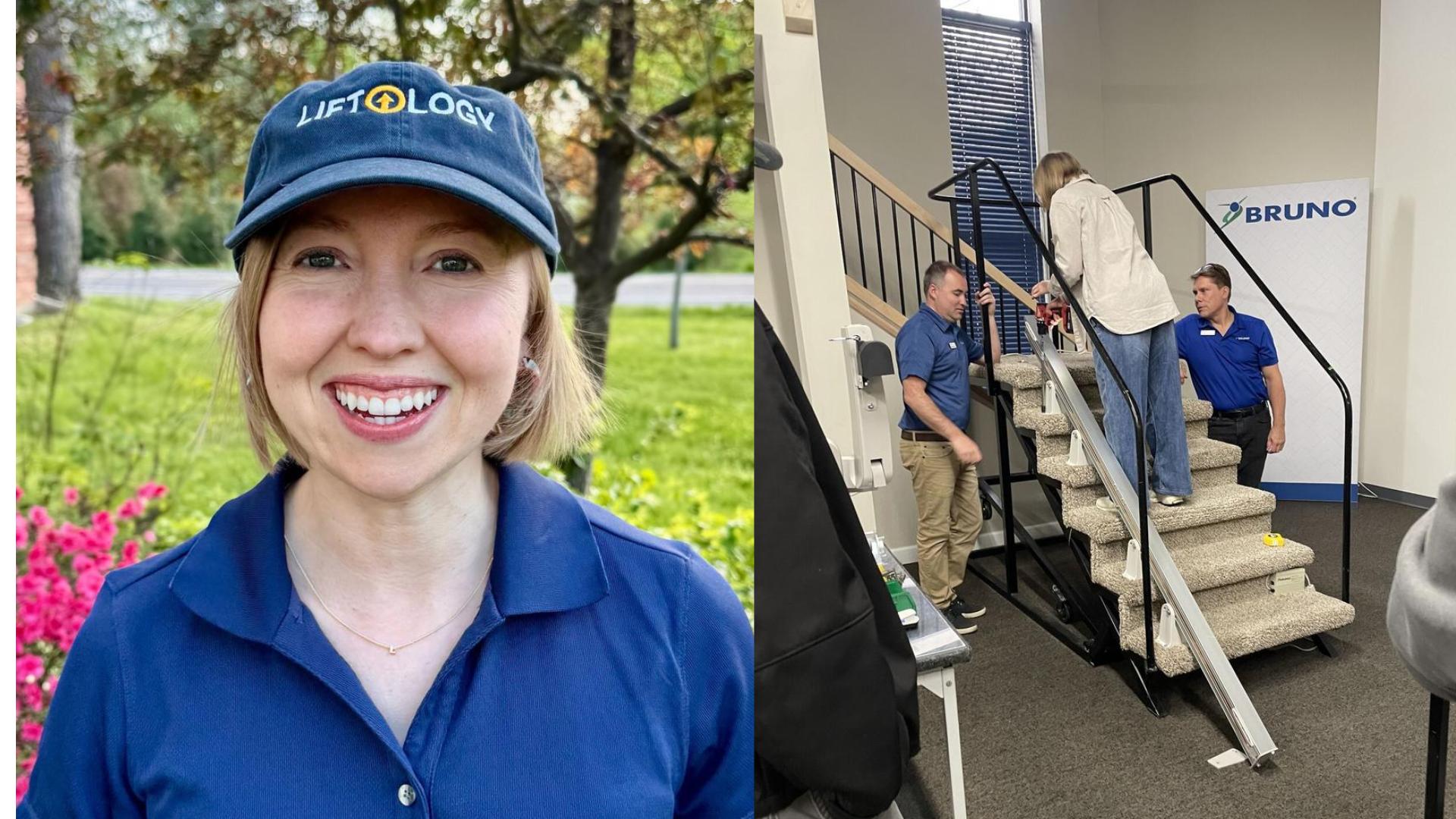 Tijana Oreščanin spent two decades running teams at large international organizations before Liftology
 How do I know if I am the right fit?
Liftology franchisees don’t manage 50 high-schoolers: the lean model runs on skilled installation technicians. But it’s by no means a passive model.
Ultimately, the owner needs to build relationships in their community. Think discharge planning officers, state agencies, and nonprofits serving people with disabilities. Community trust drives referrals more than advertising does. The goal is to become the person your territory calls when in need.
Existing franchisees come from a variety of backgrounds. For example, the franchisee building Liftology of St. Louis spent nearly a decade at major international companies, and holds an MBA. She had escaped the war in Croatia prior to that. The franchisee in San Antonio brings decades of automotive sales experience.
“One of the things I’ve been enjoying most about this new chapter is learning entirely new skills and getting my hands dirty. It’s giving me a much deeper understanding of both the customer experience and the level of expertise needed from the team we’re building.” St. Louis Franchisee
Watch the full webinar below:
Webinar Clips and Full Replay
Did you enjoy reading this blog post?
Connect with Liftology Team
or Sign up with an e-mail